
India's Energy Crunch: The Startup Playbook for What Comes Next
The West Asia conflict has done something no domestic policy debate could - it has exposed how fragile India's energy supply chain really is. And the fault lines run right through the heart of the startup economy.
India imports nearly 60% of its LPG consumption – 30+ million tonnes consumed annually against just ~13 million tonnes produced domestically. When US-Israel strikes on Iran threatened the Strait of Hormuz, the government moved fast: emergency powers were invoked, refiners were ordered to maximize LPG output, and commercial supply was deprioritized to protect domestic cooking gas. The consequences are already unfolding. But not all of them are obvious — and some might actually be opportunities.
The Obvious: Food Delivery Is Walking Into a Supply-Side Ambush
Let's start with what everyone can see.
India's restaurant sector didn’t see this coming. The National Restaurant Association of India (NRAI), which represents over five lakh restaurants, has written to the Petroleum Minister warning of "catastrophic closure of a majority of restaurants" if commercial LPG supply isn't restored. This isn't alarmism - Bengaluru's hotel association has already announced suspending operations from March 10, and in Mumbai, the India Hotels and Restaurant Association estimates 10–20% of members are already affected today, projecting 100% impact within 48 hours.
For Zomato and Swiggy, this hits in a way that's uniquely hard to defend against. It's not a demand problem — there's no fix on the marketing dashboard for it. It's a supply-side collapse: fewer active restaurant listings, unavailable menu items, longer wait times, and cancelled orders. The customer experience degrades even if the platforms do everything right. India's food delivery market was valued at $55 billion in FY25 and growing at a CAGR of 22%. That trajectory is now at risk of a significant interruption.
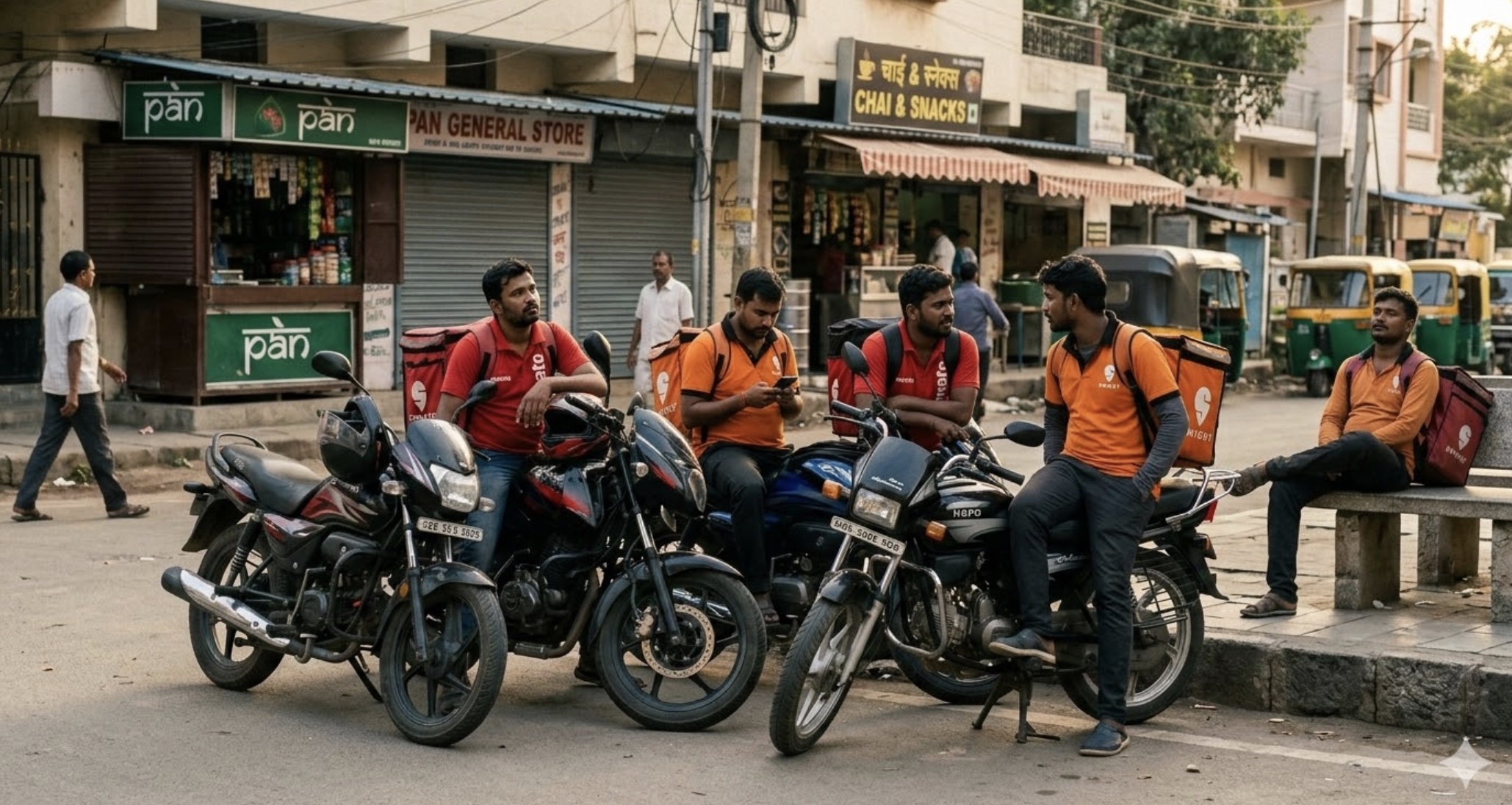
The fleet problem compounds this. Zomato and Swiggy delivery partners largely own their own vehicles - mostly petrol two-wheelers - and absorb fuel costs directly. When fuel prices spike, the immediate response isn't to ask for a raise - it's to log fewer hours or go offline. Less supply-side availability means longer delivery times, more order cancellations, and higher surge pricing. This is the invisible second punch that follows the restaurant closures: even orders that can still be placed get harder and slower to fulfil.
The Not-So-Obvious: Two Slow Fires Burning in the Background
Agriculture: The Immediate Crisis Nobody Is Talking About
Most commentary has focused on what fertilizer shortage means for next season's harvest, which is a real concern. But there's a fire burning right now that's getting far less attention.
March and April are Rabi harvest season. Combine harvesters, threshers, tractors, and diesel-powered irrigation pump sets all run on diesel. Reports from rural Madhya Pradesh (as early as March 4) show farmers panic-buying diesel in barrels, with queues forming at petrol pumps specifically out of fear of shortages during the 6-week harvest window. This isn't theoretical: historical data shows that when diesel becomes unaffordable for rented pump sets, smallholder farmers in UP and Bihar have simply abandoned standing crops. A disruption during harvest doesn't reduce next season's yield; it destroys this season's output
The lagged fertilizer effect then follows: natural gas is the primary feedstock for urea and ammonia-based fertilizers. With India already cutting industrial gas supply by 10–30% following Qatar's production halt, fertilizer plants are operating under input stress. Tighter urea availability into the Kharif sowing season (June–July) would compound an already strained agricultural cycle — and the food inflation that follows shows up in everyone's cost-of-living metrics three to four months from now.
For startups operating in agritech, retail, rural fintech, or supply chain, this creates immediate near-term risk - and a medium-term case for platforms that can help farmers optimize around fuel scarcity and input cost volatility.
Packaging: Lead Times Buy You a Window, But Not Forever
Petrochemical-derived packaging - the polypropylene pouches, plastic containers, and shrink-wrap that holds together India's FMCG and food supply chain - runs on the same propane and butane feedstock that the government has now diverted away from industrial use. The actual impact won't be felt at the shelf for several weeks, given existing inventory buffers. But if the disruption extends beyond a month, packaging cost inflation becomes a very real input cost problem for D2C brands, food startups, and any company shipping physical goods at scale.
The Silver Lining: Quick Commerce's Unexpected Moment
Here's the contrarian take: the same crisis that's hammering restaurants and food delivery could be a meaningful tailwind for quick commerce.
The behavioral logic is simple. When restaurants shut or reduce menus, and when the experience of ordering cooked food degrades (stockouts, cancelled orders, longer waits, higher prices), consumers don't stop eating. They shift. The most natural alternative to ordering a meal is cooking one at home and cooking at home starts with a grocery run. Quick commerce is that grocery run.
This isn't speculative. The government's own policy reinforces it: domestic LPG supply is being protected precisely by cutting commercial supply. This means consumers cooking at home still have gas. The raw ingredient - the Blinkit / Instamart order of onions, tomatoes, dal, and oil - is exactly what they need.
And critically, quick commerce is more insulated from the fuel cost spiral than food delivery. Blinkit has already electrified approximately 80% of its delivery fleet in major metros. Swiggy Instamart is on a similar trajectory. In contrast to food delivery, where delivery partners ride their own petrol bikes, dark store fleets are often owned or managed by fleet operators who have heavily invested in EVs precisely to reduce fuel cost exposure.
The bigger question for investors and operators isn't whether quick commerce benefits from this crisis. It almost certainly does. The question is whether Blinkit, Instamart, and Zepto have the dark store density and inventory depth to absorb a significant demand surge without their own stockout problem ; one that is, ironically, the exact problem they're benefiting from in restaurants.
The energy crunch will pass. The behavioral shifts it triggers - more home cooking, faster EV fleet adoption, a harder look at supply chain energy dependencies - may not.