
Why do Q-Commerce Companies keep changing their delivery promises?
If you’ve ordered from a quick-commerce app enough times, you’ve already seen that delivery time keeps changing. What shows up as 10 minutes one day becomes 18 the next. Free delivery appears and disappears. Sometimes you’re nudged to increase your cart value, and other times the app simply asks you to come back later. This is not a bug but a feature of quick commerce operations - this is real-time SLA (service level agreement) management playing out in front of you. At scale - across thousands of dark stores - SLA is not just a metric; it becomes the core operating system of the business.
SLA is essentially the live handshake between customer promise and operational reality. It is not just a number displayed on the app; it is a continuously recalibrated commitment based on what the system can actually deliver at that moment. Two physical systems determine this - dark stores and last-mile delivery - and both operate under very different constraints.
Dark stores, while seemingly controlled within four walls, are far from stable. They face constant stress from demand spikes, absenteeism, concurrent tasks, and order mix variability such as large baskets or long-tail SKUs that increase pick complexity. Infrastructure issues (for example, power disruptions, FSSAI visits) can add another layer of fragility. These factors compound quickly, leading to queue build-ups and slower picking cycles.
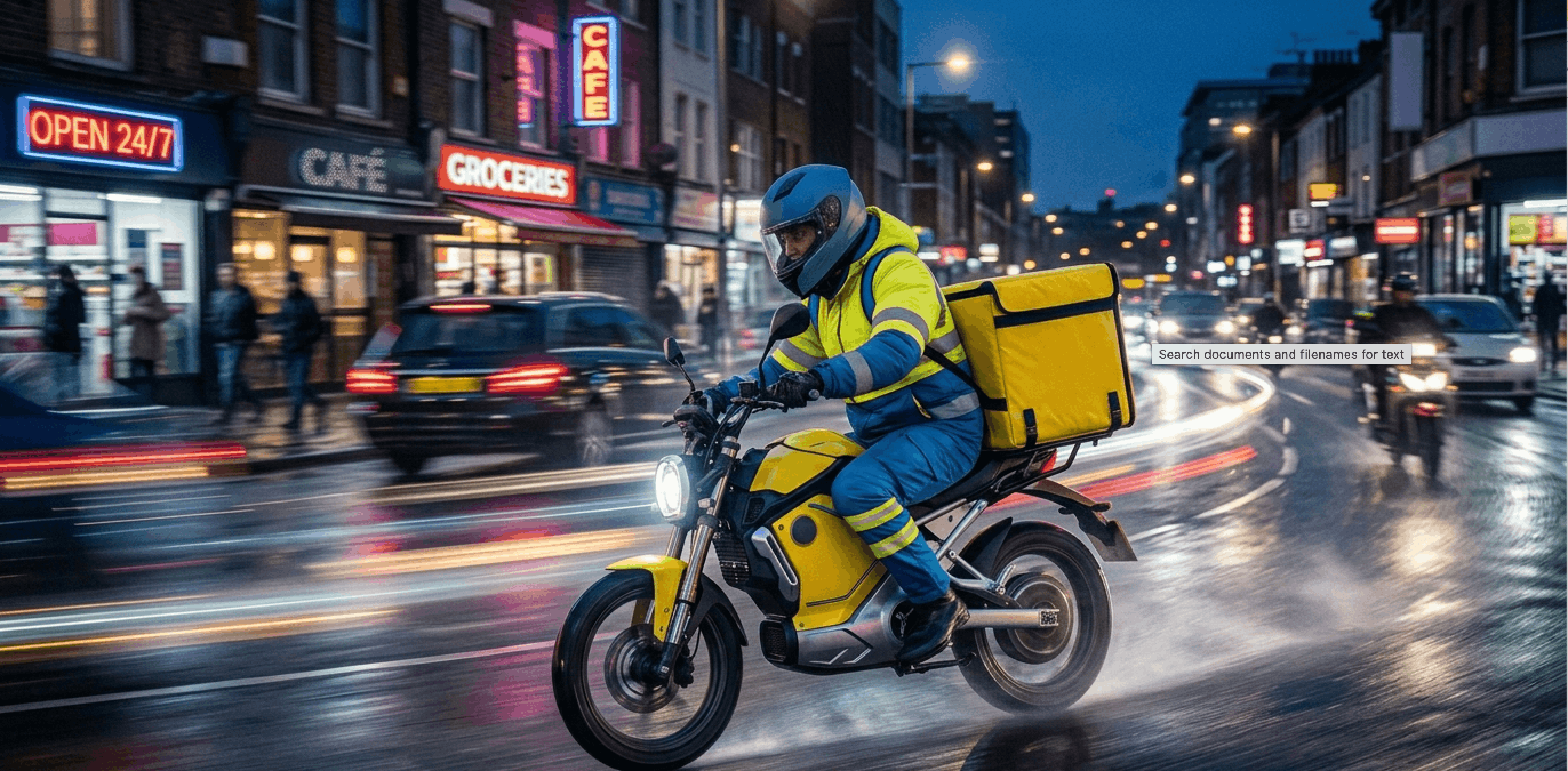
Last-mile delivery introduces even greater variability. Traffic conditions, weather disruptions like rain, rider availability, festivals, and local factors such as road closures or events make this layer inherently unpredictable.
Unless these stress factors are explicitly baked into SLA design, customer experience quickly becomes inconsistent and can lead to loss of trust and eventual migration to rival apps or alternatives.
The real challenge, therefore, is not managing delays after they happen, but anticipating, managing, and communicating delay risks. High-performing systems continuously detect stress signals and respond by communicating, pricing, shaping, or throttling demand. SLA, in this context, becomes a forward-looking control mechanism rather than a backward-looking metric.
At any given moment, the system is making a series of critical decisions. It must determine when to increase SLA and by how much - balancing between small incremental adjustments and larger step changes. It must figure out how to mobilize capacity, whether through dynamic staffing, incentivizing the workforce, or reallocating resources across nearby dark stores.
Equally important is shaping demand in real time. This could mean increasing minimum order values during peak stress or toggling delivery fees to discourage low-value orders. The system must also decide which customers to prioritize. In this sense, SLA becomes a powerful segmentation lever, not just an operational output.
Perhaps the most difficult decisions revolve around when to stop taking orders and when to restart. Stopping too early leads to lost revenue, while stopping too late risks overwhelming the system and degrading customer experience. Restarting requires confidence that queues are clearing, rider availability is recovering, and SLAs can return to acceptable levels.
Would it come as a surprise to know that there are times when giving a 30 minutes SLA is far better than closing the store, whereas a consistent 18 minutes SLA (over a promise of 10 minutes) can take the store down in a vicious cycle from which it can not recover for days? We have seen both play out in front of our eyes and can say for sure that the problem is extremely complex and needs a fair balance between art and science.
High-performing Q-commerce operations treat SLA as a control system embedded deeply into their decision-making fabric. It is a feedback loop that integrates real-time signals from dark store operations, last-mile network health, and demand patterns. Ground validation should also be part of this intelligence layer.
In the end, speed alone is not the differentiator in Q-commerce. Reliability of speed is.